
Slack Communities: How to Find and Join the Best Slack Groups in 2026
If you have been looking for a way to connect with like-minded professionals, accelerate your career, or tap into deep niche expertise online, Slack communities are one of the most underrated resources available in 2026. Unlike the noise of social media feeds or the superficiality of LinkedIn timelines, Slack groups offer focused, real-time conversations among people who genuinely care about the same topics you do — whether that is product management, data science, remote work, startup building, digital marketing, or software development. The signal-to-noise ratio in a well-run Slack community is simply higher than almost any other online forum format.
The challenge is that Slack was not originally designed for public discovery. Most Slack communities live behind invite links or require a sign-up on an external website, making them harder to find than Discord servers or Telegram channels. There is no built-in Slack directory equivalent to Discord’s server browser or Telegram’s in-app group search. This means that millions of valuable communities remain effectively invisible to newcomers who do not already know where to look.
This guide changes that. It covers everything you need to know: what Slack communities are and how they differ from other platforms, how to find them using six proven methods including cross-platform tools like Waybien, the best ones to join by niche in 2026, how to get the most out of membership, and — if you run your own workspace — how to make it discoverable to the people who would benefit from it most.
Key takeaways
• Slack communities are professional-grade online groups organized around shared interests, industries, or skills — running inside Slack workspaces with channel-based conversations.
• Unlike Telegram or Discord, Slack has no built-in public directory, so most Slack groups are found through third-party tools, directories, and niche websites.
• The six most reliable methods for finding Slack communities to join are Waybien, Slofile, Reddit, Standuply, niche industry directories, and targeted Google searches.
• The best Slack groups for professionals span tech, marketing, startups, remote work, design, customer support, and data science — most are entirely free to join.
• Making your own Slack community discoverable requires proactively listing it on external directories and cross-platform tools like waybien.com, since Slack offers no native public search for workspaces.
• Waybien indexes Slack communities alongside Telegram, WhatsApp, Discord, and Facebook groups, giving your workspace cross-platform visibility from a single search engine — reaching people who may never have thought to look on Slack.
What are Slack communities and why do they matter?
A Slack community is a group of people who communicate and collaborate inside a shared Slack workspace, organized around a common interest, profession, or goal. Each workspace contains multiple channels — dedicated spaces for specific topics such as #jobs, #introductions, #tools, or #general — allowing conversations to stay organized and easy to follow even in large groups with thousands of active members.
While Slack was originally built as an internal team communication tool for companies, it has evolved over the past decade into a thriving ecosystem of public and semi-public communities open to anyone. Professionals join Slack groups to ask questions they cannot find answers to anywhere else, find mentors, discover job opportunities posted by community insiders, share resources and tools, and network with peers in their industry — all in a low-noise environment that social media rarely provides.
The value of Slack communities comes from several structural advantages. First, the channel format keeps conversations organized by sub-topic, so you can engage with exactly the discussions that matter to you without being overwhelmed by irrelevant content. Second, the real-time nature of Slack means questions get answered quickly — often within minutes in an active workspace. Third, the people who join tend to be genuinely interested in the subject matter rather than passive scrollers, which raises the quality of discourse significantly compared to open social media platforms.
For marketers, developers, founders, designers, data scientists, and remote workers, active Slack communities have become essential professional development resources — in many industries, the most valuable job leads, collaboration opportunities, and early-access product insights circulate inside Slack groups weeks before they appear anywhere else.
Feature | Details |
Platform | Slack (owned by Salesforce since 2021) |
Community format | Workspaces with multiple topic-based channels |
Typical member range | Hundreds to tens of thousands per workspace |
Cost to join | Free (the vast majority of public communities) |
Best for | Professional networking, skill development, industry discussion, job hunting |
Discovery method | Third-party directories, invite links, niche websites, Waybien |
Message history (free plan) | 90 days (paid plans: unlimited) |
App integrations | Thousands via Slack App Directory |
Notable communities | Online Geniuses, Support Driven, MindTheProduct, DataTalks.Club, Reactiflux |
How Slack communities differ from Discord, Telegram, and WhatsApp

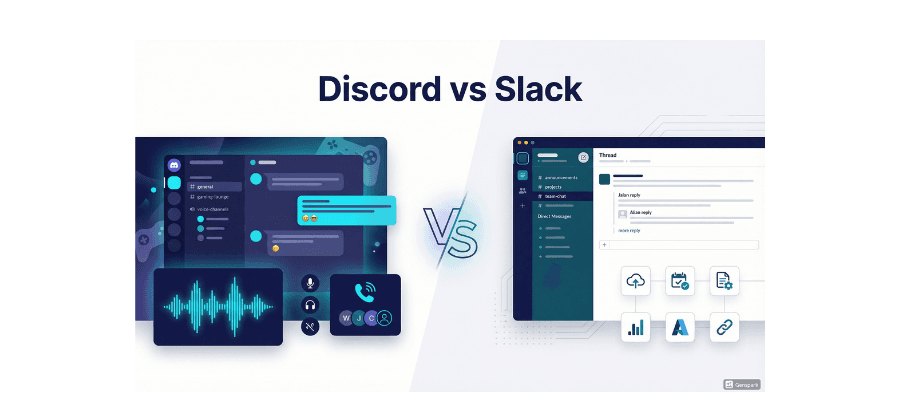
Before diving into how to find Slack communities, it is worth understanding how Slack compares to the other major community platforms. Each platform has a distinct culture, primary audience, and discovery model that affects not just how communities are built, but how easy they are to find, join, and grow.
Slack leans professional and structured. It is the go-to platform for industry groups, developer communities, SaaS users, and remote work networks. The interface is clean and business-oriented, and the culture inside most public workspaces reflects that — conversations tend to stay on topic, self-promotion is regulated, and members are typically there to learn or contribute rather than just broadcast. This makes Slack communities particularly valuable for career-driven purposes.
Discord, by contrast, started in gaming and has evolved into a broader community platform popular with creators, crypto and Web3 projects, anime fans, and younger audiences. Discord supports persistent voice channels, stage events, and a more relaxed, expressive atmosphere. It has native server discovery built in, making it far easier to browse and find communities than Slack.
Telegram excels at large public channels and open groups with no meaningful member limits. It supports unlimited subscribers in channels, 200,000-member supergroups, and has native in-app search for public communities. For communities that prioritize scale and broadcast reach, Telegram is often the strongest choice. WhatsApp remains more personal and invite-only by nature, making it better suited to small, private, or regional communities.
The most significant practical difference for community hunters is discoverability. Telegram and Discord both have native in-app search for public groups. Slack does not. Finding public Slack groups requires using external tools — which is exactly what the next section covers. And for a single place to search across all four platforms simultaneously without jumping between different directories, Waybien is the only cross-platform community search engine that indexes Slack, Telegram, WhatsApp, Discord, and Facebook communities together in one place.
Feature | Slack | Discord | Telegram | |
Primary audience | Professionals, developers | Creators, gamers, Web3 | General, tech-savvy | Personal, small business |
Max group / workspace size | Unlimited (workspace) | Unlimited (server) | 200,000 (supergroup) | 1,024 (group) |
In-app community search | No | Yes (native) | Yes (native) | No |
Public community discovery | Via directories only | Yes (Explore tab) | Yes (username search) | No |
Default encryption | In transit (TLS) | In transit (TLS) | Server-side (MTProto) | End-to-end (default) |
Bot / automation support | Yes (App Directory) | Yes (open Bot API) | Yes (open Bot API) | Business API only |
Voice / video in groups | Huddles (paid focus) | Native voice channels | Voice chats | Group calls |
Message history | 90 days (free) | Unlimited | Unlimited (cloud) | Device-stored |
Best for | Pro networking, SaaS | Communities, events | Large public groups | Private circles |
Understanding these differences helps you decide not just where to look for communities, but which platform is the right home for the community you want to build. If your audience is primarily professionals, Slack communities offer the best environment. If you need scale and open discoverability, Telegram may be a better fit. If you want to reach audiences across all platforms at once, tools like Waybien and Waybien Ads make it possible to search, list, and advertise across all of them from a single interface.
How to find Slack communities: 6 proven methods
Because Slack lacks a native public directory, finding Slack communities to join requires knowing where to look. The methods below cover every reliable discovery channel available in 2026, from dedicated Slack directories to cross-platform search engines.

Method 1: Waybien — cross-platform community search engine
Waybien.com is a cross-platform community search engine that indexes Slack workspaces alongside Telegram groups, WhatsApp communities, Discord servers, and Facebook groups in a single searchable database. You can search by keyword, filter by platform, category, language, member count, and community age, and find Slack communities in your niche without visiting multiple directories separately. Waybien is the fastest single starting point for anyone looking to discover Slack groups for professionals across industries. It is also the only tool that lets you compare communities across platforms side by side, which is useful if you are still deciding which platform to focus your community efforts on.
Method 2: Slofile — dedicated Slack community directory
Slofile is one of the most established public Slack group directories. Workspace owners can list their communities, and users can browse or search by topic. It covers categories from technology and design to marketing and education, with real member count data and direct join links where available. While Slofile does not cover every community and some listings may be outdated, it remains a reliable starting point specifically for Slack-only searches. The search function lets you filter by category, making it easy to narrow down to communities relevant to your professional field or personal interest.
Method 3: Reddit — r/slackhangouts and niche subreddits
Reddit’s r/slackhangouts is a dedicated community where people share invite links and descriptions of their Slack workspaces. Posts are organized by upvotes and recency, giving you a signal of which communities are currently active and worth joining. Beyond this dedicated subreddit, searching “[your niche] Slack community” in relevant industry subreddits — such as r/marketing, r/datascience, r/startups, or r/remotework — often surfaces active Slack groups that are not listed in mainstream directories. Reddit is particularly good for finding regional communities, language-specific groups, and niche technical workspaces that do not bother with formal directory listings.
Method 4: Standuply — 2,000+ community listing
Standuply, known primarily as a Slack standup bot, also maintains a searchable directory of over 2,000 Slack communities organized by category — from IT and hardware to marketing, design, and education. It is particularly useful for finding tech and developer-focused Slack groups, with detailed category filters and member counts. The directory has grown significantly over the years and is regularly updated, making it one of the most comprehensive Slack-specific resources for community discovery.
Method 5: Niche industry websites, blogs, and curated lists
Many industry publications and community-focused websites maintain curated lists of the best Slack communities in their vertical. Searching “best Slack communities for [your industry] 2026” in Google typically surfaces updated lists from reputable sources. For example, data science communities are well documented on DataTalks.Club, startup communities are listed on Startups.com, and tech communities are catalogued in GitHub repositories like thisdot/tech-community-slacks. These curated lists are often more reliable than broad directories because the author has personally vetted each community for quality and activity level.
Method 6: Google search with targeted queries
A targeted Google search remains one of the most effective methods for finding specific Slack communities to join. Try queries like "best Slack communities for [your role or industry] 2026", "[topic] Slack workspace invite link", or "[company or tool name] Slack community". Many communities publish a dedicated landing page with an invite link, and these pages are often indexed by Google even when the community itself is not listed in any directory. Combining Google search with Waybien for cross-platform results gives you the most comprehensive coverage of active communities in any niche.
Method | Best for | Slack-specific? | Cost |
Cross-platform search (Slack + Telegram + WhatsApp + Discord + Facebook) | No (multi-platform) | Free | |
Slofile | Browsing and searching dedicated Slack public directory | Yes | Free |
Reddit r/slackhangouts | Finding niche, regional, and newly launched Slack groups | Yes | Free |
Standuply directory | Tech, developer, and IT-focused communities | Yes | Free |
Industry blogs and lists | Curated professional communities vetted by topic experts | Yes | Free |
Google targeted search | Finding communities with public landing pages and invite links | Yes | Free |
The best Slack communities to join in 2026
There are thousands of active Slack communities across every professional field. The communities listed below represent some of the most active, well-maintained, and highly regarded groups in 2026. They span a wide range of industries and interest areas, and the vast majority are free to join. Where relevant, member counts are approximate and reflect publicly available data.

A few things to keep in mind before joining any Slack community: always read the community guidelines before posting, introduce yourself in the #introductions channel, and spend some time observing conversations before jumping in. The best communities reward contributors rather than broadcasters, so leading with value — answering questions, sharing useful resources, or making thoughtful observations — is the fastest way to build a meaningful presence.
Marketing and growth
Community | Members | What it offers | Join method |
Online Geniuses | 25,000+ | Largest marketing Slack group globally; covers SEO, paid social, email, analytics, and more | Website sign-up |
Superpath | 5,000+ | Content marketing focused; strategy discussions, job board, freelancer resources | Website sign-up |
Demand Curve | 10,000+ | Growth marketing tactics for startups; structured channels by growth stage | Website sign-up |
RevGenius | 30,000+ | B2B sales and revenue professionals; templates, playbooks, job board | Website sign-up |
Technology and development
Community | Members | What it offers | Join method |
Reactiflux | 200,000+ | Largest React developer community; live help, jobs, ecosystem discussion | Invite link |
PySlackers | 38,000+ | Python developers of all levels; projects, code reviews, career advice | Invite link |
Elixir Lang | 10,000+ | Focused Elixir and functional programming discussion | Invite link |
Kubernetes | 170,000+ | Official Kubernetes community; support, SIGs, contributor discussion | Invite link |
Data science, ML, and AI
Community | Members | What it offers | Join method |
50,000+ | Data scientists, ML engineers, AI practitioners; weekly events and courses | Website sign-up | |
dbt Community | 50,000+ | Data transformation and analytics engineering; Q&A, best practices | Invite link |
MLOps Community | 27,000+ | MLOps professionals discussing deployment, monitoring, and ML infrastructure | Invite link |
Turing Institute | 15,000+ | Applied data science; research discussions, career development | Website sign-up |
Startups and entrepreneurship
Community | Members | What it offers | Join method |
Startup Study Group | 6,000+ | Founders, investors, advisors; structured advice and peer support | Invite link |
Product Hunt | 2,800+ | Makers and early adopters; launch feedback, product discussions | Invite link |
Founders Network | 8,000+ | Vetted startup founders; investor introductions, peer mentoring | Application |
SaaS Community | 5,000+ | SaaS operators sharing GTM strategy, pricing, churn reduction tactics | Invite link |
Remote work and productivity
Community | Members | What it offers | Join method |
Remote Work Community | 10,000+ | Remote job postings, work-life balance tips, home office discussions | Website sign-up |
Nomad List | 12,000+ | Digital nomads sharing city guides, visa info, and remote work resources | Paid membership |
Established Titles | 5,000+ | Productivity and async work frameworks; tools and workflows | Invite link |
Design and UX
Community | Members | What it offers | Join method |
15,000+ | Designers and developers; design systems, UI/UX, tools discussion | Invite link | |
Designer Hangout | 20,000+ | UX and product designers; critiques, career advice, job board | Application |
Figma Community | 30,000+ | Figma users; plugins, templates, design workflow tips | Invite link |
Customer support and SaaS operations
Community | Members | What it offers | Join method |
Support Driven | 11,000+ | SaaS customer support professionals; tools, tactics, career development | Website sign-up |
Customer Success Collective | 15,000+ | CS managers and directors; playbooks, churn strategies, onboarding frameworks | Website sign-up |
ProductLed | 8,000+ | Product-led growth practitioners; PLG strategy, onboarding, metrics | Website sign-up |
You can find many of these communities — and hundreds more across different categories — by searching on Waybien.com, which indexes Slack workspaces alongside communities on Telegram, WhatsApp, Discord, and Facebook.
How to get the most out of a Slack community
Joining a Slack community is only the first step. The members who get the most value — the job leads, the mentorship, the early-access opportunities — are the ones who show up consistently and contribute rather than lurk. Here is how to move from passive observer to active, valued member.
Start with the right channels
Most Slack workspaces have dozens of channels, but only a handful will be relevant to your goals. Start with #introductions to announce yourself and read how others present themselves. Then scan the full channel list and subscribe only to the channels that match your current priorities — #jobs if you are hiring or looking, #tools if you want platform recommendations, #feedback if you want reactions to your work. Subscribing to too many channels at once leads to notification fatigue and disengagement.
Contribute before you ask
The fastest way to build credibility in any Slack community is to answer questions before you post your own. Spend your first week or two responding to threads where you genuinely have useful knowledge. A pattern of helpful contributions makes your own future questions far more likely to get substantive responses from senior members who notice your name.
Use threads to keep conversations clean
Most well-run Slack communities have a norm of replying in threads rather than posting directly in the main channel. Using threads keeps channels readable and allows focused discussions to develop without cluttering the main feed. Following this convention signals that you understand community etiquette, which matters more than most newcomers expect.
Set up keyword alerts
Slack allows you to set up notifications for specific keywords. If you are a developer, you might set alerts for your programming language. If you are a marketer, you might track keywords like your company name, competitors, or specific tactics. This ensures you never miss a conversation that is directly relevant to you, even in high-volume channels.
Attend events and AMAs
Many active Slack communities organize regular events — AMAs (Ask Me Anything) with industry experts, virtual meetups, weekly threads, or collaborative challenges. Participating in these events is the single fastest way to establish a visible presence and form real professional relationships within the community. Check your workspace’s #announcements or #events channel regularly so you do not miss high-value opportunities.
Behaviour | Impact on community value |
Lurking without contributing | Low — miss most of the value |
Answering questions in your area of expertise | High — builds reputation and reciprocity |
Sharing relevant resources or tools | High — establishes you as a go-to connector |
Participating in AMAs and events | Very High — direct access to experts and community leaders |
Using threads properly | Medium — signals professionalism and community awareness |
Setting up keyword alerts | High — ensures you engage with the most relevant conversations |
How to join a Slack community step by step
Joining a Slack community is straightforward once you have found the right one. The exact process varies depending on whether the community uses a public invite link, a website sign-up form, or an approval-based system. Here is what to expect for each method and what to do once you are inside.
First, make sure you have a Slack account. A free account at slack.com is sufficient to join most public Slack communities. You do not need to be part of any paid workspace to access free community workspaces. If you already use Slack for work, you can join additional workspaces using the same account — Slack supports switching between multiple workspaces from a single app.
Join method | How it works | Typical wait time | Common for |
Public invite link | Click the link, enter your email, sign in or create a Slack account — immediate access | Instant | Open communities: Reactiflux, PySlackers, dbt Community |
Website sign-up form | Fill out a short form on the community’s website, receive an invite by email within minutes to hours | Minutes to 24h | Curated communities: MindTheProduct, Superpath, Online Geniuses |
Approval-based | Submit a request or application, admin reviews your profile before granting access | 1–7 days | Vetted communities: Designer Hangout, Founders Network |
Referral / personal invite | An existing member sends you a personal invite link or adds you directly to the workspace | Instant | Close-knit professional networks and invite-only groups |
Once inside, follow this sequence to get settled quickly: read the #rules or #community-guidelines channel first, post a brief introduction in #introductions (mention your role, what you are working on, and what you hope to contribute), then explore the full channel list and subscribe to the five to ten most relevant to your current goals. Resist the urge to promote your own work immediately — most Slack communities have specific channels for self-promotion, and posting promotions in general channels is one of the fastest ways to get muted or removed.
How to make your Slack community discoverable
If you run a Slack community, discoverability is your biggest challenge and your biggest growth lever. Because Slack has no native public search for workspaces, new members cannot find you through the app itself — they can only join if someone shares your invite link or if they find you through an external source. This means that community growth on Slack is almost entirely driven by your own promotional efforts outside the platform.
The good news is that the steps below, taken consistently, can generate a steady stream of new members without paid advertising. The key is to distribute your community’s invite link and description across as many relevant discovery surfaces as possible, so that people searching for communities like yours — on Google, on Reddit, on community directories — can find you regardless of how they start their search.
Method | What to do | Expected impact | Effort |
List on Waybien | Submit your Slack workspace at waybien.com with a description, category, and invite link | High — cross-platform visibility across Slack, Telegram, WhatsApp, Discord, Facebook searchers | Low (one-time) |
List on Slofile | Add your workspace to Slofile’s public directory with member count and description | Medium — Slack-specific audience actively looking for communities | Low (one-time) |
Post on Reddit | Share invite link and description on r/slackhangouts and relevant niche subreddits | Medium — targeted reach to people actively searching for communities in your niche | Low (recurring) |
Create a landing page | Build a dedicated page describing your community, its value, and how to join — optimized for SEO | High — drives long-term organic traffic from Google | Medium (one-time) |
Get listed in curated blog posts | Reach out to authors of “best Slack communities for [niche]” articles and request inclusion | High — persistent referral traffic from authoritative sources | Medium (recurring) |
List on Standuply directory | Submit your workspace to Standuply’s community listing | Medium — strong for developer and tech-adjacent audiences | Low (one-time) |
Share on LinkedIn | Post about your community in relevant LinkedIn groups and your personal feed | Medium — reaches professional audience who may not be searching Slack directories | Low (recurring) |
Use Waybien Ads | Run a targeted CPV campaign via ads.waybien.com to promote your community to relevant audiences | Very High — paid promotion to actively interested community seekers across platforms | Medium (ongoing) |
Of all these methods, listing on Waybien.com offers the broadest reach because Waybien searches are not limited to Slack. They span Telegram, WhatsApp, Discord, and Facebook too. This means your Slack community becomes visible to people searching for communities on any platform — not just Slack users who already know where to look. For community owners who want to accelerate growth further, Waybien Ads allows you to actively promote your community to targeted audiences using a CPV (cost-per-view) model, putting your workspace in front of people already interested in your niche at a fraction of the cost of traditional digital advertising.
Slack communities vs other platforms: which is right for you?
Choosing the right platform for your community — or deciding which platform’s communities to join — depends on your goals, audience demographics, and how you want conversations to flow. There is no universal best platform: each has distinct strengths that make it the right choice in specific contexts. The table below provides a practical framework for making this decision based on your specific use case.
It is worth noting that many of the most successful community builders in 2026 do not choose just one platform. They maintain a Slack workspace for professional networking and structured discussion while also running a Telegram channel for broader audience reach, a Discord server for real-time voice interaction, or a WhatsApp group for a close inner circle. Each platform reaches a different segment of your potential audience, and tools like Waybien make it possible to list and manage visibility across all of them from a single place.
Use case | Best platform | Why |
Professional networking and career growth | Slack | Professional culture, structured channels, high-quality discourse |
Large public community (10,000+ members) | Telegram | 200,000 member limit, native public discoverability, unlimited channels |
Gaming, creator, or Web3 communities | Discord | Voice channels, bots, expressive culture, native server discovery |
Private family or small business groups | Default E2EE, universal adoption, simple interface | |
Cross-industry marketing and advertising | All platforms via Waybien Ads | Single CPV ad platform reaching communities on all major platforms |
Developer and open source collaboration | Slack or Discord | Both have mature developer ecosystems; Slack for async, Discord for real-time |
Real-time event discussion and live chat | Discord or Telegram | Better architecture for high-volume simultaneous conversations |
Structured team or organization comms | Slack | Workspace + channels + deep app integrations (Jira, Notion, GitHub, etc.) |
Community focused on content distribution | Telegram | Channels with unlimited subscribers and built-in monetization options |
B2B SaaS users and customers | Slack | Users already have Slack; low friction onboarding for product communities |
How Waybien helps you discover Slack and other communities
The fundamental challenge with finding Slack communities is structural: Slack was not built for public community discovery. Every other major platform — Telegram, Discord, even Facebook — has some form of in-app search or browse feature for public groups. Slack does not. This architectural gap means that valuable communities remain invisible to people who would genuinely benefit from them, and community owners struggle to grow because potential members simply cannot find them through the app.
Waybien was built specifically to close this gap — not just for Slack, but across all major community platforms simultaneously. Waybien is a cross-platform community search engine that aggregates and indexes groups and channels from Slack, Telegram, WhatsApp, Discord, and Facebook into a single searchable database. Users can search by keyword, filter by platform, category, language, member count, and community age, and discover the right community regardless of which platform it lives on.
For community seekers, waybien.com replaces the need to check five different directories and three different Reddit threads every time you want to find a new group. One search surfaces results from every major platform, ranked and filterable by the criteria that matter to you. Whether you are looking for a professional Slack community in your industry, a large Telegram channel for your niche, or a Discord server for a hobby project, Waybien finds them all in one place.
For community owners, listing your Slack workspace on Waybien is free and immediately expands your discoverability beyond the Slack ecosystem. Your community becomes visible to people searching for communities in your niche regardless of which platform they started from — including people who may never have thought to look on Slack specifically. This is particularly valuable for Slack communities because, unlike Telegram or Discord groups, Slack workspaces receive essentially zero platform-native discoverability. Waybien fills that gap directly.
For marketers and businesses who want to advertise inside communities rather than just discover them, Waybien Ads offers a CPV-based advertising model powered by the SmartAd Algorithm™. Ads are placed in front of engaged community audiences across Slack, Telegram, WhatsApp, Discord, and Facebook simultaneously — from a single campaign dashboard. This makes community advertising accessible and efficient at a scale that was previously impossible without managing multiple ad platforms and dozens of individual community relationships.
Whether you are looking to join the best Slack communities in your niche, grow your own workspace, or reach community audiences with your product or service, Waybien is the most efficient starting point in 2026.
Frequently asked questions
1. Are Slack communities free to join?
Yes, the vast majority of public Slack communities are free to join. Some may have premium tiers or paid events associated with their broader organization — Nomad List, for example, has a paid membership — but core Slack workspace access is almost always free. You need a free Slack account to participate, which takes about two minutes to create at slack.com.
2. How do I find Slack communities without an invite link?
The most reliable methods for finding Slack communities without a direct invite link are: search on Waybien.com for cross-platform results including Slack, browse Slofile’s dedicated Slack directory, search Reddit’s r/slackhangouts, use the Standuply community directory for tech groups, or Google “[your industry] Slack community 2026.” Many communities also have landing pages that appear in Google results even when the workspace itself is not listed in any directory.
3. What is the difference between a Slack workspace and a Slack channel?
A Slack workspace is the top-level environment — think of it as the community itself, with its own URL, member list, and settings. Channels are the individual topic-based rooms within that workspace. For example, the Online Geniuses workspace has channels like #seo, #paid-social, and #jobs. You join a workspace first, then subscribe to whichever individual channels are most relevant to your goals. A single Slack workspace can have dozens or even hundreds of channels.
4. Can I search for Slack communities the same way I search for Discord servers?
Not natively inside the Slack app. Discord has a built-in server discovery feature with categories, tags, and search; Slack does not offer an equivalent for public workspaces. To search for public Slack groups the way you would browse Discord servers, use a cross-platform tool like Waybien or a Slack-specific directory like Slofile. Both allow keyword and category search across listed workspaces.
5. What are the best Slack communities for marketers?
Online Geniuses (25,000+ members), Superpath (content marketing), Demand Curve (growth marketing), and RevGenius (B2B sales and revenue) are among the most active and valuable Slack communities for marketers in 2026. All four are free to join via their respective website sign-up pages and have dedicated channels for SEO, paid media, content strategy, analytics, and career development.
6. How do I make my Slack workspace discoverable to new members?
Since Slack has no native public discovery, proactive listing is essential. Start by submitting your workspace to waybien.com for cross-platform visibility, then list on Slofile and the Standuply directory, post on r/slackhangouts with a description and invite link, and create a simple SEO-optimized landing page. For faster growth, Waybien Ads lets you promote your community to targeted audiences using a CPV model.
7. How many people can be in a Slack community?
There is no hard upper member limit for a Slack workspace. Free plans have limitations on message history (90 days) and the number of apps you can integrate, but not on member count. Paid plans (Pro, Business+, Enterprise Grid) remove these restrictions. In practice, the largest public Slack communities have tens of thousands of members — Reactiflux exceeds 200,000, while Online Geniuses surpasses 25,000 and Support Driven tops 11,000.
8. Is Slack better than Discord for professional communities?
For professional networking and industry-specific communities, Slack generally offers a better experience. Its structured channel model, app integrations (GitHub, Jira, Notion, Google Drive, and thousands more), and professional user base make it well suited for career-focused groups where the quality of discussion matters more than volume or entertainment value. Discord is stronger for communities that rely on real-time voice, gaming culture, or younger, more casual audiences. For a detailed side-by-side breakdown of both platforms, see our Discord vs Slack for Communities guide on the Waybien blog.